-
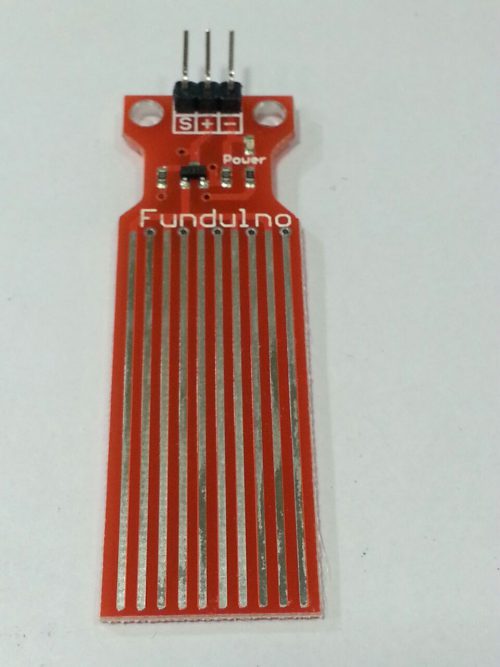 Water sensor brick is designed for water detection, which can be widely used in sensing rainfall, water level, and even liquid leakage. Water Detector / Sensor Connecting a water sensor to an Arduino is a great way to detect a leak, spill, flood, rain, etc. It can be used to detect the presence, the level, the volume and/or the absence of water. While this could be used to remind you to water your plants, there is a better Grove sensor for that. The sensor has an array of exposed traces, which read LOW when water is detected.
 -
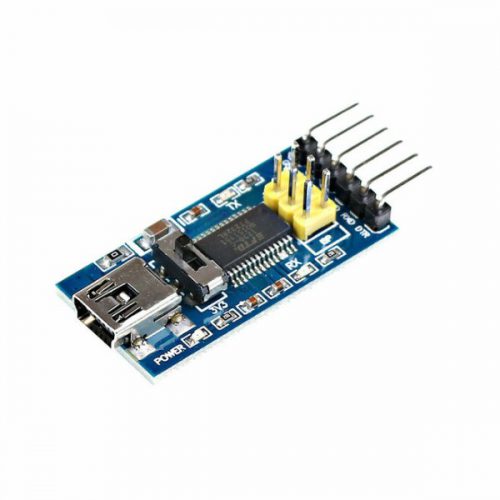 Feature: Chip: FT232RL Draw out all signal port of FT232RL chip RXD / TXD transceiver communication indicator USB power supply, can choose 5V or 3.3V, set by jumper With over current protection, using 500mA self-restore fuse Pin definition: DTR, RXD, TX, VCC, CTS, GND Pitch: 2.54mm Size: 36 x 18mm (L x W) Interface: Mini USB
 -
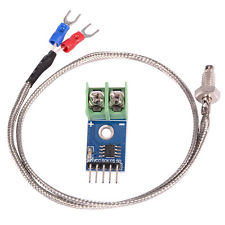 The MAX6675 performs cold-junction compensation and digitizes the signal from a type-K thermocouple. The data is output in a 12-bit resolution, SPI™-compatible, read-only format. This converter resolves temperatures to 0.25°C, allows readings as high as 1024°C, and exhibits thermocouple accuracy of 8LSBs for temperatures ranging from 0°C to 700°C. The MAX6675 is available in a small, 8-pin SO package.
 -
 It is a 75MM X 60MM solar cell. Which has 7.5V / 50MA rating.
 -
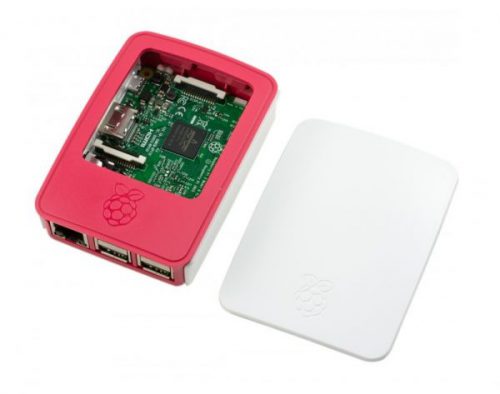 The official Raspberry Pi 3 case in a stunning Red & white design Optional clip-on lid provides protection but can be removed if using a HAT All primary ports (including micro SD) accessible Removable side plate allows access to those wonderful GPIO pins Snug and secure fit.
 -
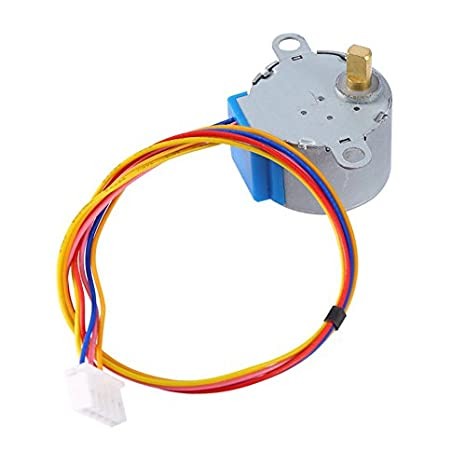 A unipolar stepper motor has one winding with center tap per phase. Each section of windings is switched on for each direction of magnetic field. Since in this arrangement a magnetic pole can be reversed without switching the direction of current, the commutation circuit can be made very simple (e.g., a single transistor) for each winding. Typically, given a phase, the center tap of each winding is made common: giving three leads per phase and six leads for a typical two phase motor. Often, these two phase commons are internally joined, so the motor has only five leads.
 -
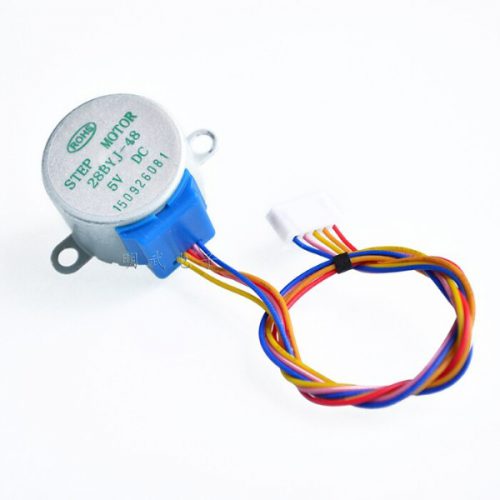 A unipolar stepper motor has one winding with center tap per phase. Each section of windings is switched on for each direction of magnetic field. Since in this arrangement a magnetic pole can be reversed without switching the direction of current, the commutation circuit can be made very simple (e.g., a single transistor) for each winding. Typically, given a phase, the center tap of each winding is made common: giving three leads per phase and six leads for a typical two phase motor. Often, these two phase commons are internally joined, so the motor has only five leads.
 -
 PICkit 2 has a separate programmer/debugger unit which plugs into the board carrying the chip to be programmed, whereas the PICkit 1 was a single unit. This makes it possible to use the programmer with a custom circuit board via an In Circuit Serial Programming (ICSP) header. This feature is not intended[3] for so-called "production" programming, however. The PICkit 2 uses an internal PIC18F2550 with FullSpeed USB. The latest PICkit 2 firmware allows the user to program and debug most of the 8 and 16 bit PICmicro and dsPIC members of the Microchip product line. The PICkit 2 is open to the public, including its hardware schematic, firmware source code (in C language) and application programs (in C# language). End users and third parties can easily modify both the hardware and software for enhanced features. e.g. Linux version of PICkit 2 application software, DOS style CMD support, etc.
 -
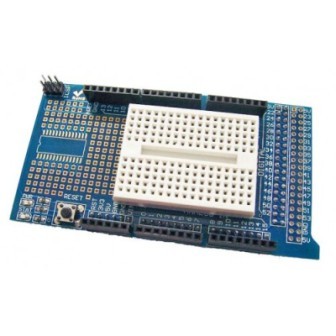 The Mega2560 Shield makes it easy for you to design custom circuits. You can solder parts to the prototyping area to create your project, or use it with a small solderless breadboard to quickly test circuit ideas without having to solder. It's got extra connections for all of the Arduino I/O pins, and it's got space to mount through-hole and surface mount integrated circuits. It's a convenient way to make your custom circuit and Arduino into a single module.

YOUR PARTNER IN TECHNOLOGY SOLUTIONS
YOUR PARTNER IN TECHNOLOGY SOLUTIONS

No.1030, Shriram Building,
Near Nagnath Par,
Sadashiv Peth, Pune – 411030,
Maharashtra, India
 Visit Our store
STORE TIMINGS
Monday to Saturday
10:00 AM to 7.30 PM
(Store closed on all Sundays and Public Holidays)
NOTE
*All the prices are excluding Tax rates & are subject to change after a specific period of time.
Copyright © 2024@AbhinavDCS
