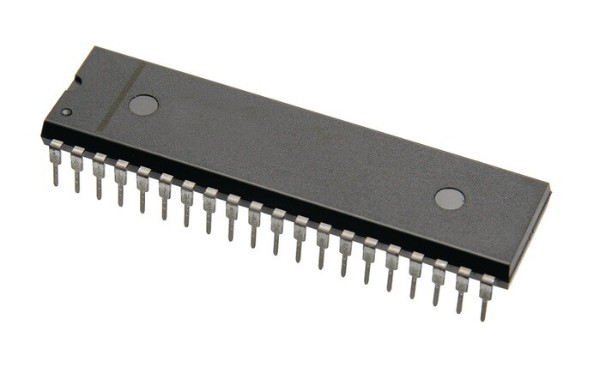
ATMEGA162-16PU 8-Bit High-Performance AVR Microcontroller DIP-40 (ATMEGA162-16PU IC)
The ATMEGA162-16PU is a specialized, high-performance 8-bit AVR RISC-based microcontroller designed for applications requiring high-speed processing and robust connectivity. Housed in a 40-pin DIP package, it is uniquely characterized by its dual programmable USARTs, allowing for simultaneous communication with multiple serial devices. It also supports up to 64KB of external memory, a rare feature in this class that makes it suitable for memory-intensive embedded tasks.
In India, the ATMEGA162 is often used in industrial networking, multi-sensor interface controllers, and advanced robotics where the standard single serial port of the ATmega16 is insufficient. Its picoPower technology ensures low power consumption, making it efficient for field-mounted instruments.
Key Features
- Dual Serial USARTs: Two independent programmable serial ports for multi-device communication.
- External Memory Support: Addressable space for up to 64KB of optional external RAM/Flash.
- Advanced RISC Architecture: Features 131 powerful instructions and an on-chip 2-cycle multiplier.
- JTAG Interface: IEEE 1149.1 compliant for boundary-scan, on-chip debugging, and programming.
- Versatile Clocking: Supports a 16MHz maximum clock frequency with an internal calibrated RC oscillator.
- Expanded I/O: Provides 35 programmable I/O lines in the 40-pin DIP format.
- Low Voltage Range: Operates reliably on supplies from 2.7V to 5.5V.
Specifications
- IC Type: 8-Bit Microcontroller (MCU)
- Flash Memory: 16 KB (10,000 write/erase cycles)
- EEPROM / SRAM: 512 Bytes / 1 KB
- Speed Grade: 0 - 16 MHz
- Timers: Two 8-bit and two 16-bit Timer/Counters with compare modes.
- PWM Channels: 6 channels for precise motor or light control.
- Analog Features: On-chip Analog Comparator (Note: This specific model does not have an internal ADC).
- Package Type: PDIP-40 (Through-Hole)
- Operating Temperature: -40 to +85 degrees Celsius
Pinout Highlights (40-Pin DIP)
- Pin 1-8 (PB0-PB7): Port B I/O (Includes SPI, PWM, and Timer/Counter functions).
- Pin 9 (RESET): Reset input (Active low).
- Pin 10 (VCC): Digital supply voltage.
- Pin 11 (GND): Ground.
- Pin 12 (XTAL2): Crystal oscillator output.
- Pin 13 (XTAL1): Crystal oscillator input.
- Pins 14-21 (PD0-PD7): Port D I/O (Includes USART0 and external interrupts).
- Pins 22-29 (PC0-PC7): Port C I/O (Higher bits include USART1 functions).
- Pins 33-40 (PA0-PA7): Port A I/O (Data/Address bus for external memory).