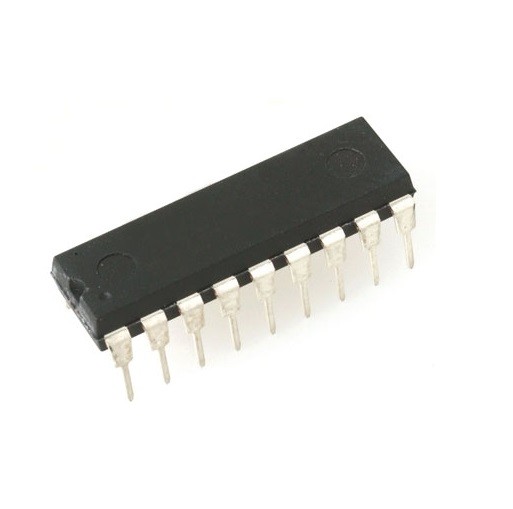
TEA1060 Versatile Telephone Transmission Circuit DIP-18 (TEA1060 IC)
The TEA1060 is a bipolar integrated circuit designed to perform all speech and line interface functions required in fully electronic telephone sets. Housed in an 18-pin DIP package, it features electronic switching between dialing and speech modes. It is specifically optimized for use with low-impedance dynamic or magnetic microphones, providing a high voltage gain of approximately 52 dB.
In India, this IC is a legacy standard for landline telephone repair and the design of electronic communication headsets. It includes an integrated voltage regulator that can power external peripheral circuitry, such as pulse or DTMF dialers, simplifying the overall PCB design.
Key Features
- Integrated Voltage Regulator: Features adjustable static resistance and provides a stable supply for external dialer ICs.
- Symmetrical Inputs: Designed specifically for low-impedance magnetic or dynamic microphones (8.2 kΩ impedance).
- Line Loss Compensation: Automatically adjusts microphone and earpiece gain based on the line current to maintain consistent audio levels.
- DTMF Interface: Includes a dedicated input for DTMF signals with a built-in confidence tone.
- Dual-Mode Operation: Features a Mute input for switching between dialing (pulse/DTMF) and speech modes.
- Receiving Amplifier: Capable of driving magnetic, dynamic, or piezoelectric earpieces with an adjustable gain range.
- DC Line Voltage Adjustment: Allows for fine-tuning the DC characteristics to match specific exchange requirements.
Specifications
- IC Type: Telephone Transmission Circuit
- Operating Line Current: 10 mA to 140 mA
- Microphone Gain: 52 dB (Typical, adjustable ±8 dB)
- Earpiece Gain: 25 dB (Single-ended) / 31 dB (Differential)
- Supply Voltage ($V_{LN}$): 4.45V (at 15 mA line current)
- Internal Supply Current: 1.3 mA (Typical)
- Package Type: PDIP-18 (Through-Hole)
- Operating Temperature: -25°C to +75°C
Pinout Configuration (18-Pin DIP)
- Pin 1 (LN): Positive Line Terminal
- Pin 2 (GAS1): Transmitting Gain Adjustment 1
- Pin 3 (GAS2): Transmitting Gain Adjustment 2
- Pin 4 (QR+): Non-Inverting Receiver Output
- Pin 5 (GAR): Receiving Gain Adjustment
- Pin 6 (MIC-): Inverting Microphone Input
- Pin 7 (MIC+): Non-Inverting Microphone Input
- Pin 8 (STAB): Current Stabilizer (3.6 kΩ resistor to VEE)
- Pin 9 (VEE): Negative Supply (Ground)
- Pin 10 (QR-): Inverting Receiver Output
- Pin 11 (IR): Receiving Amplifier Input
- Pin 12 (PD): Power-Down Input
- Pin 13 (DTMF): Dual-Tone Multi-Frequency Input
- Pin 14 (MUTE): Mute Input (High inhibits microphone/earpiece)
- Pin 15 (VCC): Positive Supply Decoupling
- Pin 16 (REG): Voltage Regulator Decoupling
- Pin 17 (AGC): Automatic Gain Control Input
- Pin 18 (SLPE): Slope (DC Resistance) Adjustment